
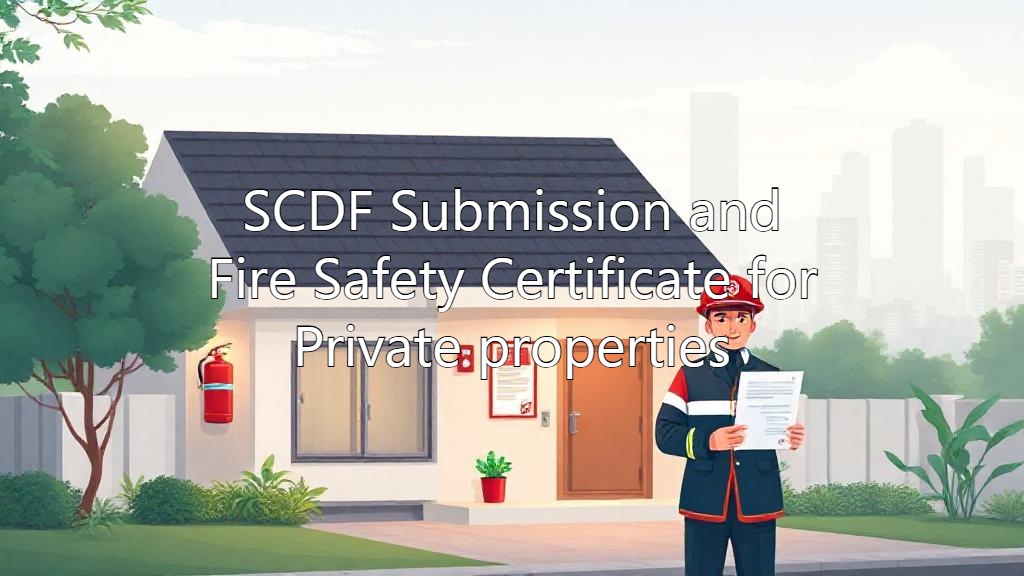

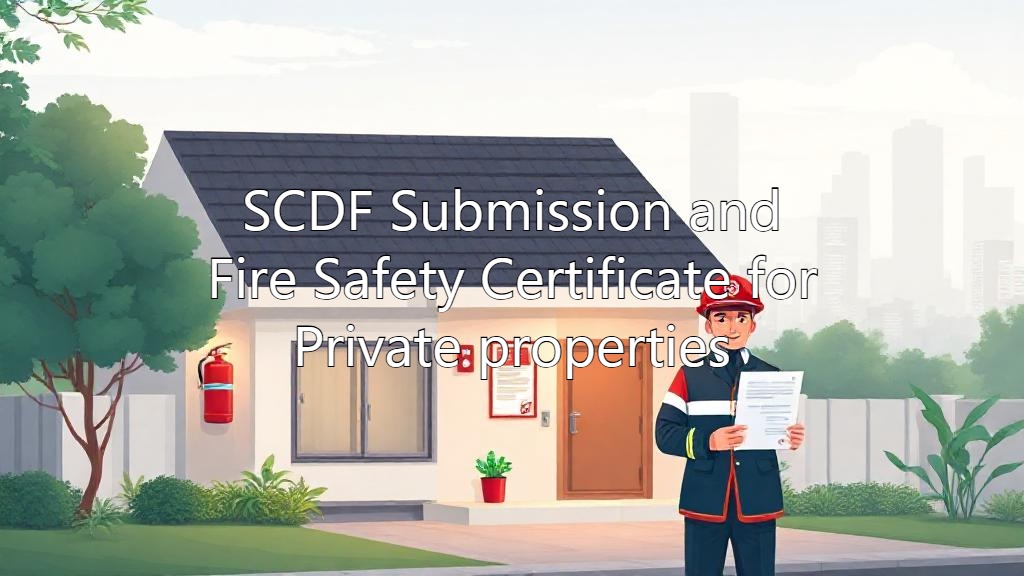
A well-maintained fire safety system is the beacon of security that shields private properties from the ravages of fire, saving countless lives and assets in the process.
The Singapore Civil Defence Force plays a vital role in ensuring that private properties are equipped with the necessary fire safety measures.
Understanding the SCDF submission process and the requirements for a Fire Safety Certificate is crucial for private property owners to ensure compliance with regulations.
Applying for Fire Safety Certificate in Singapore for Private Residential Buildings
The Fire Safety Certificate is a crucial document that ensures private residential buildings in Singapore meet the necessary fire safety standards, providing a safe living environment for occupants.
The application process involves submitting detailed plans and undergoing inspections by the Singapore Civil Defence Force.
Obtaining a Fire Safety Certificate is not just a regulatory requirement, but a matter of life and death.
-
Time is of the essence when it comes to fire safety, as every minute counts in preventing accidents and saving lives.
-
Strict compliance with fire safety regulations is essential to avoid penalties and ensure public safety.
-
Proactive measures such as regular fire drills and maintenance of fire protection systems can help prevent fires and reduce risks.
Understanding the Requirements for SCDF Submission and Fire Certificate Application
The civil defence force scdf submission and Fire Certificate application requirements can be overwhelming, as detailed fire safety plans must be prepared by a qualified person for the building owner and endorsed by a professional engineer or registered inspector, depending on the scope and following criteria.
Seeking guidance from relevant resources can facilitate a smoother process.
Understanding these requirements can be broken down into manageable steps. The application for a scdf fire safety certificate must be submitted electronically via CORENET and include a Registered Inspector’s report. The submission must also demonstrate compliance with the fire code. Where temporary use or occupation is needed before the full Fire Safety Certificate is issued, a temporary fire permit tfp may be sought for temporary occupation during transitional phases, subject to specific conditions.
Importance of Obtaining a Fire Certificate for Private Properties in Singapore
A recent fire incident in a Singaporean condominium highlights the significance of obtaining a Fire Certificate.
The lack of proper fire safety measures can have devastating consequences, including loss of life and property damage.
In Singapore, a fire safety certificate (FSC) is issued by the Singapore Civil Defence Force before occupancy, after inspection, to certify that a completed project, including a public building, complies with fire safety requirements, while a Fire Certificate applies to certain premises under separate regulatory requirements.
The Fire Certificate is a critical document that verifies a property’s compliance with the Fire Safety Act. Owners should keep the certificate and related approval records securely for future reference.
Fire Certificates are required for specific premises such as hospitals and help ensure the ongoing maintenance of fire safety systems.
Step-by-Step Guide to Submitting a Fire Certificate Application via GoBusiness Portal
Submitting a fire certificate application via the GoBusiness portal is a meticulous process that requires attention to detail.
To initiate the process, users must first register for a Corppass account, which serves as the gateway to the GoBusiness portal.
The application form must be filled out accurately and completely, with all required fields populated with relevant information. As an scdf inspection-linked process, SCDF typically processes Fire Safety Certificate applications within 3 working days for administrative handling, but the full application processing for Fire Safety Certificate usually takes 4 to 6 weeks when inspections or supporting checks are required.
Renewing a Fire Certificate for Private Properties Before Expiration Date
Renewing a fire certificate for private properties in Singapore is crucial to ensure compliance with the Fire Safety and Shelter Department regulations.
The renewal process typically involves submitting an application, paying the required fees, and undergoing a fire safety inspection. Owners should also check guidance on fc non-renewal years when preparing supporting documents and timelines. For premises that require a Fire Certificate, a fire safety manager may also be needed to support ongoing compliance and renewal readiness.
Property owners should submit renewal applications at least two months before the expiration date to avoid fines and penalties.
Calculating the Cost of Fire Certificate Application for Residential and Non-Residential Premises
Determining the cost of a fire certificate application is crucial for premises owners.
-
Assessing the type of premises, whether residential or non-residential, to determine the application fee, which is $11 per residential storey.
-
Checking the size and complexity of the premises to calculate the inspection cost, noting that non-residential Fire Safety Certificate fees are $36 per storey from 2026.
-
Reviewing the fire safety measures in place to ensure compliance with regulations, as costs can also depend on the state of completed fire safety works.
-
Determining the frequency of inspections required to maintain the fire certificate.
-
Calculating the total cost, including application fees, inspection costs, and any additional expenses.
Maintaining Compliance with Fire Safety Regulations to Avoid Penalties and Fines
Compliance with fire safety regulations is crucial for businesses, and fire safety compliance is a core duty of building owners to avoid penalties and fines.
Non-compliance can lead to severe consequences, including loss of life and property damage.
Fines and penalties can be a significant burden on businesses, affecting their reputation, finances, and workplace safety certifications.
Effective fire safety management requires a proactive approach, including regular risk assessments to reduce fire hazards, employee training, and proper maintenance of fire safety systems.
Consequences of Non-Compliance with Fire Safety Act and Regulations for Private Property Owners
Non-compliance with fire safety regulations can have devastating consequences.
A significant number of fires in Singapore are caused by electrical faults or unattended cooking, highlighting the importance of regular fire safety inspections and maintenance.
According to the Singapore Civil Defence Force, non-compliance with fire safety regulations can result in hefty fines and even imprisonment.
Benefits of the 3-Year Fire Certificate Regime for Private Property Owners and Occupiers
The 3-year fire certificate regime offers numerous benefits to private property owners and occupiers, including enhanced fire safety measures and reduced risk of fire-related accidents.
This regime is more relevant to certain premises, such as hospitals and industrial buildings or other public uses, rather than private residential buildings generally.
Where a Fire Certificate is required, the application should be made within 12 months of statutory completion, encouraging property owners to regularly inspect and maintain fire protection systems.
A temporary occupation permit may arise during the occupancy approval stage, but it does not replace the need to meet fire safety certification requirements where applicable.
By adopting this regime, private property owners and occupiers can mitigate potential liabilities and financial losses resulting from fire-related incidents.
The importance of fire safety remains a persistent concern for private property owners, with the SCDF submission and Fire Safety Certificate being a crucial aspect of ensuring the well-being of occupants.
Fire Safety Engineering: 2026 Structural Requirements for EV Charging in Carparks
Improving Employee Wellbeing And Reducing Healthcare Costs With Fuss Free Management