
In Singapore’s dense urban environment, landscape architecture serves multiple critical functions: creating green lungs for the city, managing stormwater through sustainable drainage systems, providing habitat for urban wildlife, offering recreational spaces for residents, and contributing to the nation’s distinctive identity as a garden city. The profession’s importance is reflected in mandatory requirements for green building certification, minimum green plot ratios, and comprehensive landscape maintenance standards that ensure long-term sustainability.
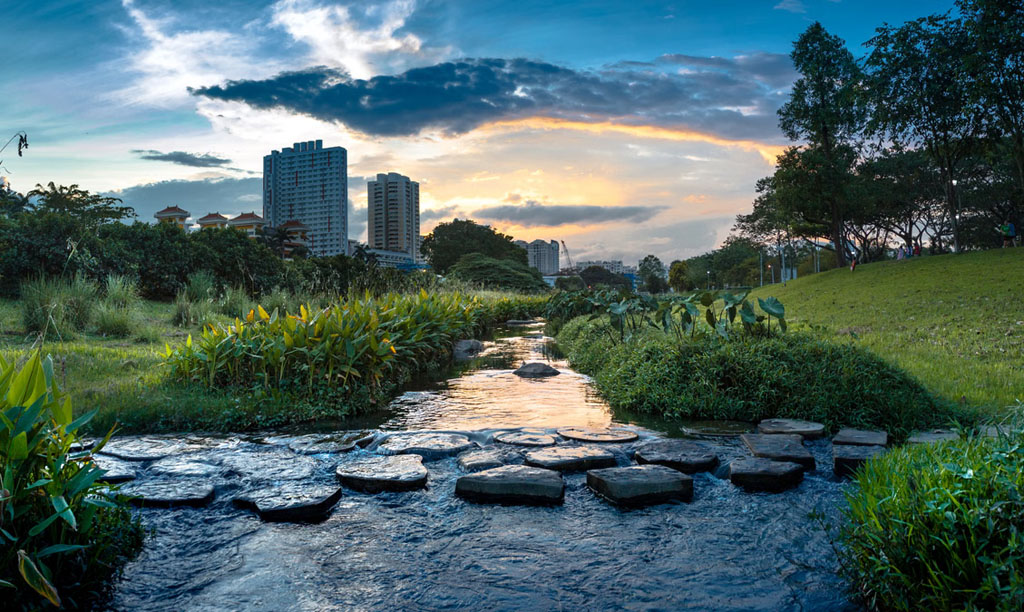
Climate resilience has become a paramount consideration in Singapore’s landscape architecture practice. With rising temperatures and changing precipitation patterns, landscape architects are designing adaptable spaces that can withstand extreme weather events while continuing to provide essential ecosystem services. This includes the selection of climate-resilient plant species, implementation of rain gardens and bioswales for flood management, and creation of cool corridors that mitigate urban heat effects.
The social dimension of landscape architecture in Singapore emphasizes community building and social cohesion. Public spaces designed by landscape architects serve as venues for cultural events, exercise activities, and social interaction across diverse demographic groups. The thoughtful design of these spaces considers universal accessibility, multi-generational use, and cultural sensitivity, creating inclusive environments that strengthen Singapore’s social fabric.
Initial Consultation
Site Analysis
Concept Design
Design Development
Documentation
Tender & Award
Construction
Handover
Site analysis forms the scientific foundation of landscape architecture, involving systematic investigation of physical, environmental, and regulatory factors that influence design decisions. In Singapore’s context, this phase requires particular attention to tropical conditions including monsoon drainage patterns, sun path analysis for year-round conditions, and microclimate assessment considering the urban heat island effect. Landscape architects employ various analytical tools including topographic surveys, soil testing, tree assessment reports, and environmental impact studies.
The site analysis phase involves extensive documentation of existing conditions through photography, measured drawings, and digital surveying. Advanced technologies such as LiDAR scanning and photogrammetry are increasingly used to create accurate 3D site models that serve as the basis for design development. Underground utilities mapping is crucial in Singapore’s dense urban environment where extensive networks of cables, pipes, and tunnels constrain landscape interventions.
Environmental assessment during this phase examines factors including existing biodiversity, hydrological patterns, and ecological connections to surrounding green spaces. This analysis informs strategies for enhancing ecological value while meeting development objectives. In accordance with Singapore’s biodiversity conservation goals, landscape architects identify opportunities to create habitat corridors, incorporate native plant species, and support urban wildlife populations including birds, butterflies, and small mammals.
During this phase, landscape architects produce various visualization materials to communicate design intent effectively. These include hand sketches that capture the design essence, digital renderings that illustrate spatial experiences, concept diagrams that explain organizational logic, and precedent images that reference design inspiration. The use of virtual reality and augmented reality technologies is becoming increasingly common, allowing clients to experience proposed designs immersively before commitment to detailed development.
The conceptual design phase also involves preliminary coordination with other consultants including architects, civil engineers, and mechanical and electrical engineers. This coordination ensures that landscape proposals integrate seamlessly with building design, structural requirements, and service infrastructure. In Singapore’s integrated project delivery environment, early coordination prevents costly conflicts and enables innovative solutions such as integrated water management systems and coordinated lighting designs.
Design development advances selected concepts toward implementation readiness through progressive refinement of spatial layouts, material specifications, and technical details. This phase involves detailed resolution of grading and drainage strategies, plant selection and arrangement, hardscape materials and patterns, and landscape furniture specifications.
The plant selection during design development balances aesthetic objectives with practical considerations including growth rates, maintenance requirements, pest susceptibility, and climate resilience. Singapore’s landscape architects work with an extensive palette of tropical plants, selecting species that provide year-round interest while supporting biodiversity objectives.
The drawing set for landscape projects typically includes site preparation plans showing demolition and protection requirements, grading and drainage plans establishing finished levels and water management systems, layout plans locating all landscape elements precisely, planting plans indicating species locations and quantities, irrigation plans detailing water distribution systems, lighting plans showing fixture locations and circuiting, and construction details illustrating specific assemblies and installations. These drawings utilize standardized symbols and conventions that facilitate clear communication with contractors familiar with Singapore’s construction practices.
Written specifications complement drawings by describing quality standards, installation procedures, and performance requirements for all landscape components. Specifications follow standardized formats such as the Singapore Standard SS CP 48 for landscape work, ensuring comprehensive coverage of materials, workmanship, and testing requirements. Particular attention is given to soil preparation specifications, plant quality standards, and establishment maintenance requirements that are critical for project success in tropical conditions.
Tender evaluation involves systematic assessment of submissions against predetermined criteria. Price comparison considers not only bottom-line figures but also rates reasonableness, completeness of pricing, and value engineering proposals. Technical evaluation examines proposed methodologies, program schedules, and resource allocations. Post-tender negotiations may address clarifications, scope adjustments, and contract terms before final appointment. The selected contractor enters into formal contract with the client, with the landscape architect continuing involvement through construction administration.
The construction phase begins with site establishment including temporary facilities setup, site protection measures implementation, and existing vegetation preservation where required. Site preparation works follow, involving demolition of existing structures, topsoil stripping and stockpiling, and rough grading to design levels.
Hardscape construction follows infrastructure installation, including paving, walls, water features, and site structures. Quality control during hardscape construction focuses on dimensional accuracy, finish quality, and structural integrity. Regular site softscape installation represents the final major construction phase, bringing life to the landscape through plant installation. Timing of planting works considers seasonal factors and establishment requirements, with preference for periods of moderate weather conditions.
Sustainability principles permeate Singapore’s landscape architecture practice, driven by resource constraints, environmental commitments, and economic considerations. The Singapore Green Building Council’s landscape certification schemes establish benchmarks for sustainable design, addressing energy efficiency, water conservation, material selection, and ecological performance. Landscape architects integrate sustainability considerations throughout design processes, from initial concept development through long-term maintenance planning.
Water conservation strategies respond to Singapore’s dependence on imported water and rainfall harvesting, with landscape designs minimizing irrigation requirements through appropriate plant selection, efficient irrigation systems, and soil moisture retention techniques. Drought-tolerant species, though challenging in Singapore’s typically wet conditions, provide resilience during occasional dry spells. Hydrozoning groups plants with similar water requirements, enabling targeted irrigation that reduces waste. Smart irrigation controllers respond to weather conditions and soil moisture levels, reducing water consumption by up to 50% compared to timer-based systems.
Energy efficiency in landscape design addresses both direct consumption through lighting and irrigation systems and indirect effects through microclimate modification. LED lighting technology reduces energy consumption while enabling dynamic lighting scenarios that respond to usage patterns. Strategic vegetation placement provides building shading, reducing air conditioning loads by up to 30%. Green roofs and walls provide insulation while managing storm water, with studies showing temperature reductions of 5-7°C in adjacent spaces.
Sensor networks deployed throughout landscapes monitor environmental conditions including soil moisture, air quality, temperature, and lighting levels. These real-time data streams inform automated responses such as irrigation activation, lighting adjustment, and maintenance scheduling. Machine learning algorithms analyze historical patterns to predict maintenance needs, preventing problems before they manifest. For example, soil sensors detect moisture stress before visible plant wilting, triggering targeted irrigation that maintains plant health while minimizing water waste.
QR codes and NFC tags at plant labels connect users to detailed information about species characteristics, cultural significance, and ecological roles. Augmented reality applications overlay digital content onto physical landscapes, enabling educational experiences and virtual art installations. Mobile apps facilitate facility booking, event notifications, and maintenance reporting, creating two-way communication between users and managers.
BCA’s Green Mark certification scheme includes comprehensive landscape criteria addressing water efficiency, sustainable construction practices, and environmental management. Projects seeking higher certification tiers must demonstrate exceptional landscape performance through innovative design and verified outcomes.
Structural requirements for landscape over structure situations, increasingly common in Singapore’s compact development context, demand careful engineering coordination. Load calculations must account for soil saturation, plant maturity, and maintenance equipment access. Waterproofing and drainage designs must protect structural integrity while supporting plant health. BCA’s advisory notes provide technical guidance, but landscape architects retain responsibility for ensuring structural adequacy throughout design life.
The National Parks Board oversees tree conservation, biodiversity protection, and park connector integration that collectively ensure Singapore’s landscape heritage preservation and enhancement. The Parks and Trees Act provides legal framework for protecting significant trees, with stringent requirements for preservation, transplanting, or replacement when removal is unavoidable. Landscape architects must conduct detailed tree assessments, proposing mitigation measures that maintain canopy coverage and ecological value.
| Regulatory Body | Key Requirements | Submission Stage |
|---|---|---|
| Urban Redevelopment Authority | Green Plot Ratio, LUSH compliance, Urban Design Guidelines | Development Application |
| Building & Construction Authority | Structural submissions, Accessibility compliance, Green Mark | Building Plan Submission |
| National Parks Board | Tree conservation, Biodiversity assessment, Streetscape | Landscape Submission |
| Public Utilities Board | ABC Waters, Drainage compliance, Water efficiency | Engineering Submission |
| National Environment Agency | Mosquito prevention, Environmental management | Pre-construction |