Stage 1: Pre-Design Consultation
Initial consultation with BCA, project feasibility assessment, and Green Mark target setting

The Green Mark scheme serves as a critical tool in Singapore’s ambitious journey toward becoming a zero-carbon nation by 2050, aligning with global climate action initiatives while addressing local environmental challenges unique to tropical urban settings.
The entry-level certification represents buildings that meet fundamental environmental standards and demonstrate commitment to sustainable practices. Buildings achieving Green Mark Certified status must score a minimum of 50 points across the assessment categories. This level requires compliance with mandatory requirements including minimum energy efficiency standards, water efficiency fixtures, sustainable construction practices, and basic indoor environmental quality measures. Certified buildings typically achieve 10-15% improvement in energy efficiency compared to code-compliant buildings. The certification serves as a stepping stone for building owners beginning their sustainability journey, providing a framework for continuous improvement toward higher certification levels.
The entry-level certification represents buildings that meet fundamental environmental standards and demonstrate commitment to sustainable practices. Buildings achieving Green Mark Certified status must score a minimum of 50 points across the assessment categories. This level requires compliance with mandatory requirements including minimum energy efficiency standards, water efficiency fixtures, sustainable construction practices, and basic indoor environmental quality measures. Certified buildings typically achieve 10-15% improvement in energy efficiency compared to code-compliant buildings. The certification serves as a stepping stone for building owners beginning their sustainability journey, providing a framework for continuous improvement toward higher certification levels.
GoldPLUS represents exemplary environmental performance and leadership in sustainable building practices. Requiring a minimum of 85 points, GoldPLUS buildings integrate innovative green technologies, passive design strategies, and comprehensive environmental management systems. These buildings achieve 25-30% or greater energy savings through advanced building automation systems, high-performance facades, and optimized HVAC systems. GoldPLUS certification mandates renewable energy integration, advanced water recycling systems, and extensive green spaces. The certification level is increasingly becoming the standard for premium commercial developments and government buildings, reflecting Singapore’s commitment to environmental excellence.
Platinum certification represents the pinnacle of green building achievement in Singapore, reserved for buildings that demonstrate outstanding environmental performance and innovation. With a minimum requirement of 90 points, Platinum buildings are showcase projects that push the boundaries of sustainable design and technology. These buildings achieve energy savings exceeding 30% through cutting-edge technologies such as smart building systems, extensive renewable energy deployment, and innovative cooling strategies adapted to tropical climates. Platinum certification requires comprehensive sustainability features including net-zero energy potential, extensive water recycling and rainwater harvesting, biodiversity conservation measures, and exceptional indoor environmental quality. Platinum buildings serve as living laboratories for green building innovation and set benchmarks for the industry.
The Super Low Energy category represents an elite tier beyond Platinum, designed for buildings that achieve exceptional energy performance through innovative design and technology integration. SLE buildings must demonstrate at least 60% energy savings compared to 2005 building codes, requiring revolutionary approaches to building design and operation. These buildings typically feature advanced passive cooling strategies, extensive building-integrated photovoltaics, thermal energy storage systems, and artificial intelligence-powered building management systems. SLE certification requires comprehensive energy modeling, detailed measurement and verification protocols, and continuous performance monitoring. Currently, only a select few buildings in Singapore have achieved this prestigious certification level.
Zero Energy certification represents the ultimate achievement in sustainable building design, awarded to buildings that produce as much energy as they consume on an annual basis. These buildings combine ultra-efficient building systems with extensive renewable energy generation to achieve net-zero energy consumption. Zero Energy buildings employ radical energy reduction strategies including advanced daylighting systems, natural ventilation optimization, and innovative cooling technologies suited to tropical climates. The certification requires comprehensive energy monitoring and reporting, with buildings demonstrating net-zero performance over a minimum twelve-month period. This category embodies Singapore’s vision for a carbon-neutral built environment and serves as a testament to the feasibility of achieving zero-energy performance in tropical urban contexts.
Initial consultation with BCA, project feasibility assessment, and Green Mark target setting
Integration of green features, energy modeling, and preliminary design documentation
Submission of design documentation, BCA evaluation, and provisional award
Sustainable construction practices, quality control, and progress monitoring
As-built verification, commissioning, and performance testing
Final assessment, certification issuance, and public recognition
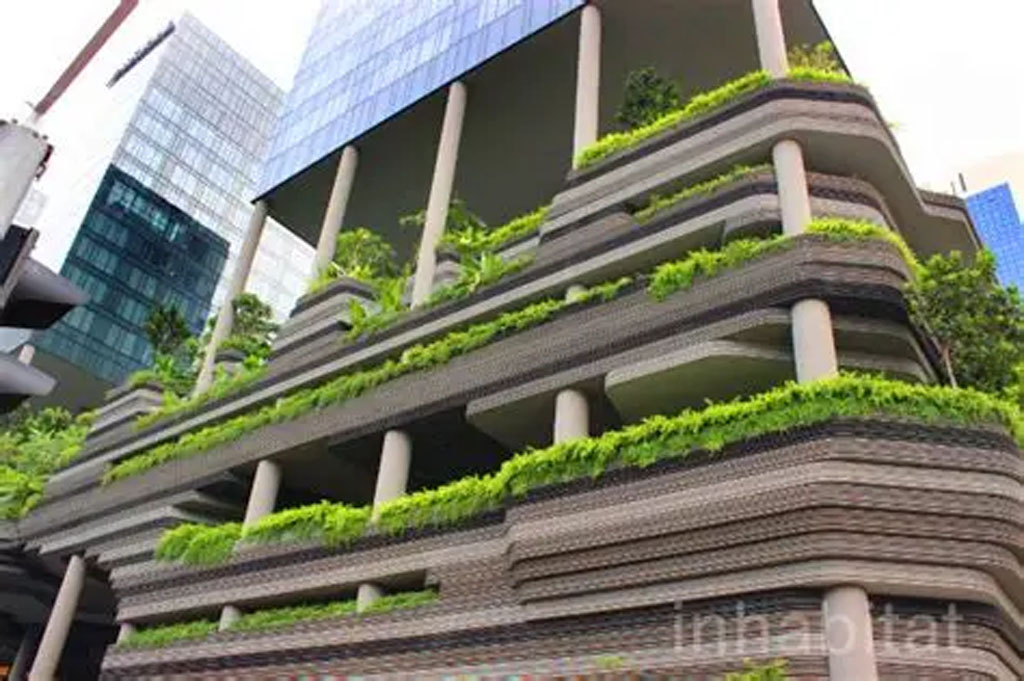
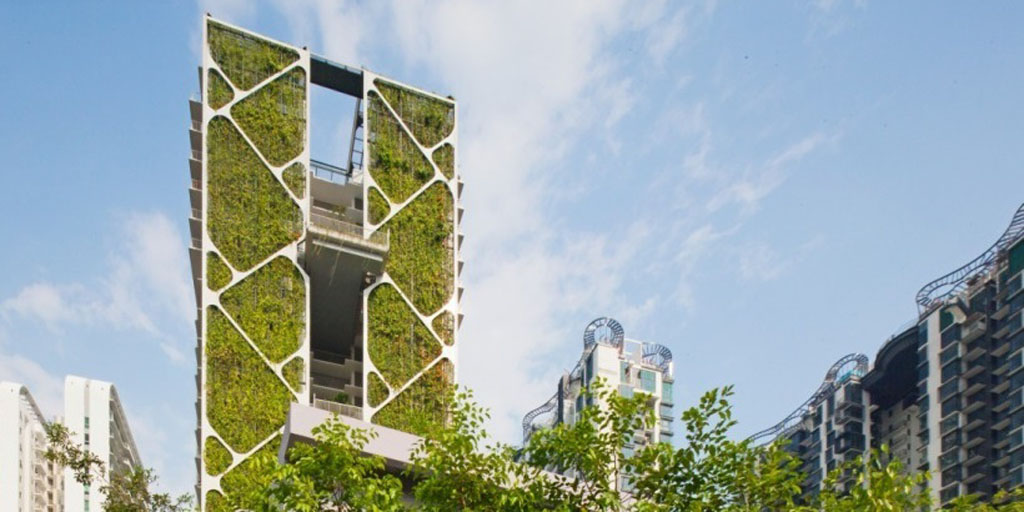
The scope of works for achieving Green Mark certification in new construction projects encompasses multiple disciplines and requires coordinated effort from all project stakeholders. The architectural scope includes optimizing building orientation to minimize solar heat gain, designing high-performance building envelopes with appropriate shading devices, and maximizing daylight penetration while controlling glare. Architects must integrate passive design strategies including natural ventilation pathways, thermal mass optimization, and cool roof technologies to reduce cooling loads in Singapore’s tropical climate. The architectural design must also accommodate green spaces, including sky gardens, green walls, and rooftop gardens, which contribute to biodiversity, urban cooling, and occupant well-being.
Mechanical and electrical engineering scopes form the technical backbone of Green Mark certification. HVAC system design must achieve stringent efficiency targets through the selection of high-efficiency chillers, optimized air distribution systems, and demand-controlled ventilation. The implementation of energy recovery systems, including heat recovery wheels and heat pipes, maximizes energy efficiency in Singapore’s humid climate. Lighting design requirements encompass the use of efficient LED fixtures, daylight sensors, and occupancy controls to minimize lighting energy consumption. Electrical systems must accommodate renewable energy integration, with provisions for photovoltaic systems and battery storage where applicable. Building automation systems integration ensures optimal control and monitoring of all building systems.
The structural engineering scope for Green Mark buildings extends beyond conventional structural design to incorporate sustainability considerations. Structural systems must be designed to accommodate green roofs and sky gardens, requiring additional load capacity and waterproofing provisions. The use of sustainable concrete mixes incorporating recycled aggregates and supplementary cementitious materials reduces the carbon footprint of structural elements. Structural design optimization minimizes material usage while maintaining safety factors, reducing both environmental impact and construction costs. The integration of structural systems with architectural features such as shading devices and light shelves requires close coordination between design disciplines.
The retrofitting of existing buildings for Green Mark certification represents one of the most impactful strategies for reducing Singapore’s built environment carbon footprint. With over 70% of buildings that will exist in 2030 already constructed today, the transformation of existing building stock is essential for achieving national sustainability targets. The Green Mark for Existing Buildings scheme provides a structured framework for evaluating and improving the environmental performance of operational buildings, addressing unique challenges associated with retrofitting including structural limitations, operational constraints, and the need to minimize disruption to building occupants.
The assessment methodology for existing buildings differs significantly from new construction certification, focusing on actual operational performance rather than design intent. The evaluation process begins with comprehensive energy and water audits to establish baseline performance metrics and identify improvement opportunities. These audits employ advanced measurement and verification protocols, including sub-metering of major energy consumers, thermal imaging to identify building envelope deficiencies, and water balance studies to detect leakages and inefficiencies. The audit findings inform the development of a tailored retrofitting strategy that prioritizes interventions based on cost-effectiveness, environmental impact reduction potential, and implementation feasibility.
Retrofitting strategies for existing buildings must balance environmental objectives with practical constraints including budget limitations, structural constraints, and the need to maintain building operations during renovation works. Energy efficiency improvements typically focus on upgrading HVAC systems, which account for 50-60% of energy consumption in commercial buildings. Chiller plant retrofitting, including the replacement of aging chillers with high-efficiency magnetic bearing or oil-free chillers, can achieve energy savings of 30-40%. Air distribution system improvements, including fan upgrades, duct sealing, and the implementation of variable air volume systems, further enhance energy performance. The retrofitting of building automation systems enables optimal control strategies including demand-based ventilation, optimal start-stop sequences, and predictive maintenance algorithms.
Comprehensive energy audit, water audit, and indoor environmental quality assessment. Establish baseline performance metrics and identify improvement opportunities.
Develop retrofitting masterplan, prioritize interventions, conduct cost-benefit analysis, and set performance targets aligned with Green Mark certification goals.
Detailed design of retrofitting measures, procurement planning, stakeholder engagement, and obtaining necessary approvals and permits.
Phased implementation of retrofitting measures, quality control, progress monitoring, and coordination with building operations.
System commissioning, performance verification, operational fine-tuning, and staff training on new systems and procedures.
Documentation submission, BCA assessment, performance demonstration, and certification award.
| Retrofitting Category | Typical Measures | Energy/Water Savings | Green Mark Points |
|---|---|---|---|
| HVAC Systems | Chiller replacement, VSD retrofits, BMS upgrade | 25-40% | 15-25 points |
| Lighting Systems | LED conversion, controls installation, daylight harvesting | 50-70% | 10-15 points |
| Building Envelope | Window films, cool roof, external shading | 10-20% | 8-12 points |
| Water Systems | Efficient fixtures, leak detection, greywater recycling | 30-40% | 8-10 points |
| Renewable Energy | Solar PV installation, solar hot water | 10-25% | 10-20 points |
| Indoor Environment | IAQ improvements, thermal comfort optimization | 5-10% | 5-8 points |