
The LEW certification system is carefully structured to match the competency levels of electrical workers with the complexity and risk levels of different types of electrical work. This graded system ensures that electrical workers progress through their careers with appropriate supervision and experience before taking on more complex and potentially hazardous tasks. The system recognizes that electrical work ranges from simple domestic installations to complex industrial systems, each requiring different levels of expertise and experience.
LEW Grade 11 represents a specialized category within the LEW system, focusing specifically on cable jointing work. This certification is essential for workers who install, maintain, and repair cable joints in power distribution systems. Cable jointing is a critical skill in Singapore’s electrical infrastructure, particularly given the extensive underground cable networks that power the nation. Grade 11 LEWs must demonstrate expertise in various jointing techniques, understanding of different cable types, and knowledge of safety procedures specific to high-voltage work.
The scope of work for Grade 11 LEWs includes jointing of low voltage cables up to 1,000V, preparation of cable ends for termination, installation of heat-shrink and cold-shrink joint kits, and testing of completed joints for electrical integrity. These workers often operate in challenging environments such as cable chambers, tunnels, and outdoor installations where weather conditions can affect both safety and work quality. The certification process for Grade 11 includes both theoretical examination and practical assessment of jointing skills.
LEW Grade 9 certification authorizes holders to perform general electrical work on installations operating at voltages not exceeding 1,000V AC. This grade forms the largest category of LEW holders and covers the broadest scope of electrical work in residential, commercial, and light industrial settings. Grade 9 LEWs are the workhorses of Singapore’s electrical industry, responsible for the installation, maintenance, and repair of electrical systems in homes, offices, shops, and small factories.
The competencies required for Grade 9 certification encompass a wide range of electrical knowledge and skills. Certificate holders must understand electrical theory, be proficient in reading and interpreting electrical drawings, know how to select and install appropriate cables and equipment, and be able to test and commission electrical installations. They must also be well-versed in SS 638 requirements and be able to ensure that all work complies with Singapore’s electrical safety standards.
LEW Grade 8 represents an intermediate level of certification that bridges the gap between general electrical work and specialized high-voltage operations. Grade 8 LEWs are authorized to work on electrical installations up to 22,000V, significantly expanding their scope beyond the limitations of Grade 9. This certification is typically held by experienced electricians who have demonstrated advanced competency and are ready to take on more complex electrical challenges.
The additional responsibilities that come with Grade 8 certification include working on medium voltage switchgear, transformer installations, and industrial control systems. These LEWs often supervise Grade 9 workers and serve as technical leaders on construction sites and maintenance teams. The certification process for Grade 8 is more rigorous than Grade 9, requiring candidates to demonstrate not only technical proficiency but also leadership and problem-solving abilities.
At the apex of the LEW certification hierarchy sits Grade 7, authorizing work on all electrical installations regardless of voltage level. Grade 7 LEWs are the elite of the electrical workforce, possessing the knowledge and experience to work safely on high-voltage transmission systems, major industrial installations, and critical infrastructure. These professionals often hold key positions in power generation facilities, transmission companies, and large industrial plants where high-voltage expertise is essential.
The path to Grade 7 certification is long and demanding, typically requiring many years of experience at lower grades plus additional specialized training. Grade 7 LEWs must understand complex electrical phenomena such as system stability, protection coordination, and arc flash hazards. They are often called upon to lead emergency response teams, design maintenance procedures for critical equipment, and train other electrical workers in high-voltage safety practices.
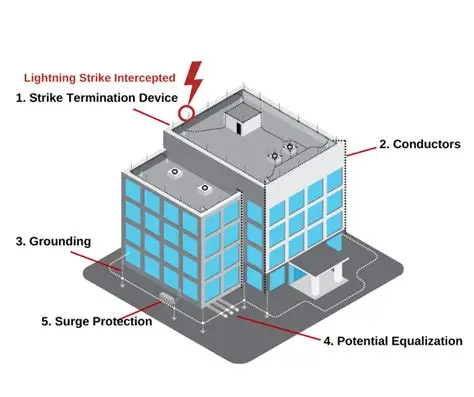
The design, installation, and maintenance of LPS require specialized knowledge and expertise that goes beyond general electrical engineering, demanding a thorough understanding of atmospheric electricity, structural engineering, and risk assessment methodologies.
Air terminals intercept lightning strikes before they can damage the structure. These can be vertical rods, horizontal conductors, or mesh systems depending on the building design and protection requirements. In Singapore, the placement and sizing of air terminals must account for the high frequency of lightning strikes and comply with SS 555 requirements for protection angles and rolling sphere methods.
Down conductors provide low-impedance paths for lightning current to flow from air terminals to ground. These must be routed to minimize inductance, avoid sharp bends, and maintain adequate separation from building occupants and sensitive equipment. In tall buildings common in Singapore, multiple down conductors are essential to divide lightning current and reduce magnetic fields.
The earthing system disperses lightning energy safely into the ground. In Singapore’s varied soil conditions, from coastal areas with high water tables to inland regions with rocky substrates, earthing design must be adapted to achieve sufficiently low resistance. This often requires extensive electrode systems, chemical enhancement, or deep driven rods.