
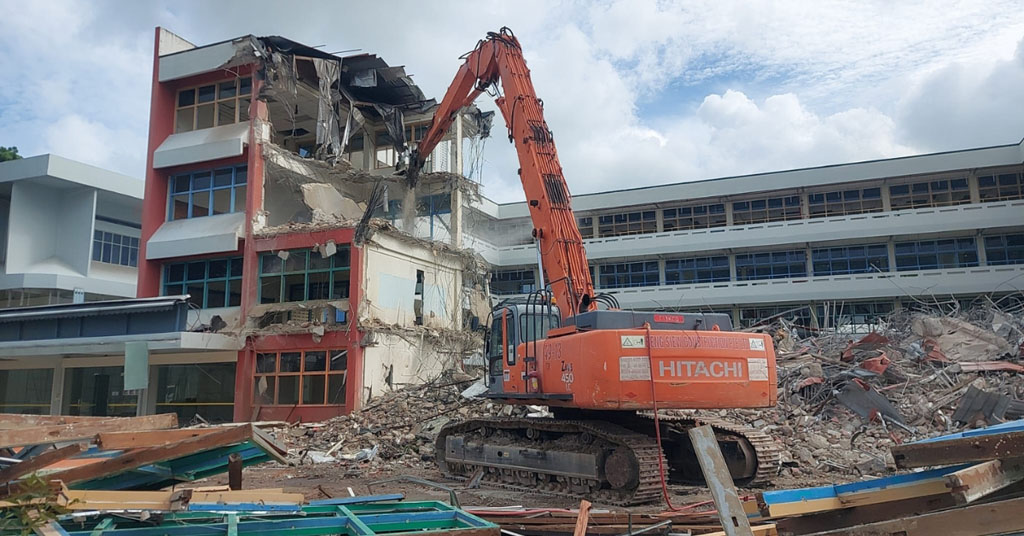
The demolition permit system in Singapore serves multiple critical functions within the construction ecosystem. It ensures that all demolition activities are conducted safely, minimizes environmental impact, protects adjacent properties, and maintains proper documentation for urban planning purposes. The BCA’s comprehensive approach to demolition regulation has established Singapore as a regional leader in construction safety and sustainable urban development practices.
This phase typically begins with a comprehensive site investigation to understand existing conditions, identify potential challenges, and gather information necessary for detailed planning. Site investigations must document structural conditions, utility locations, adjacent property conditions, and any special site characteristics that may influence demolition planning.
Stakeholder engagement represents another crucial pre-submission activity. Early consultation with affected parties, including adjacent property owners, utility providers, and relevant government agencies, helps identify concerns and requirements that must be addressed in the demolition plan. The BCA encourages pre-submission consultations with their officers to clarify requirements and identify potential issues before formal submission. These consultations can significantly reduce the likelihood of rejection or requests for additional information during the formal review process.
Demolition works in Singapore can be broadly categorized based on extent, methodology, and structural implications. Total demolition involves the complete removal of structures down to foundation level or below, requiring comprehensive planning to ensure stability during progressive removal. This category represents the most complex demolition operations, often involving high-rise buildings or large industrial structures where careful sequencing is critical to maintaining safety throughout the process.
Partial demolition presents unique challenges as it requires maintaining the integrity of remaining structures while removing designated portions. This category includes facade retention projects, where historic building exteriors are preserved while interiors are completely rebuilt. The engineering complexity of partial demolition often exceeds that of total demolition due to the need for temporary support systems, precise cutting techniques, and continuous monitoring of structural behavior.
Selective demolition, often called strip-out works, focuses on removing specific building components while preserving the primary structure. This approach is common in renovation projects where non-structural elements, mechanical systems, or interior finishes must be removed. While less structurally complex than total demolition, selective demolition requires careful planning to avoid damage to retained elements and often involves manual methods to ensure precision.
The selection of appropriate demolition methodology depends on numerous factors including structural type, site constraints, environmental considerations, and safety requirements. Mechanical demolition using excavators equipped with specialized attachments remains the most common approach for low to medium-rise structures. This method offers good productivity, reasonable control, and moderate noise levels. Modern hydraulic attachments provide precise cutting and breaking capabilities while maintaining safe working distances.
High-reach demolition has become increasingly prevalent for tall structures where traditional methods pose safety risks. Specialized excavators with extended booms can safely demolish buildings up to 30 meters high while operators remain at ground level. This methodology requires careful planning of debris fall zones, progressive reduction sequences, and stability monitoring throughout the demolition process. The capital investment in high-reach equipment is justified by enhanced safety and productivity on appropriate projects.
| Demolition Method |
|---|
| Mechanical Demolition |
| High-Reach Demolition |
| Hand Demolition |
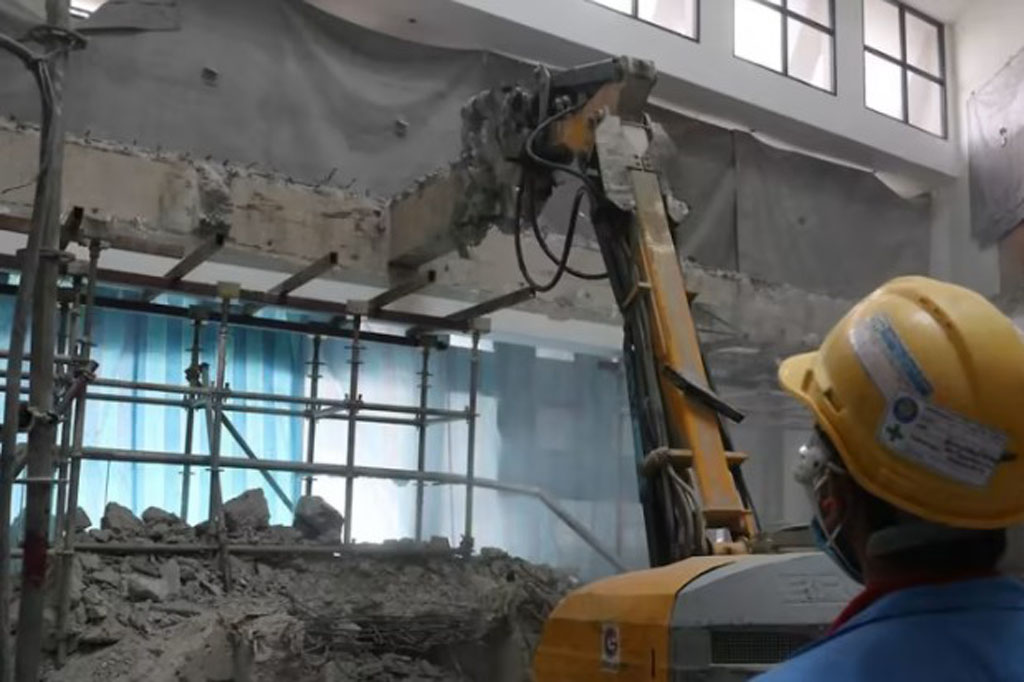
| Robotic Demolition |
Advanced demolition projects often require specialized techniques that go beyond conventional mechanical methods. Diamond wire sawing has emerged as a preferred method for precise cutting of reinforced concrete structures where minimal vibration is critical. This technique enables controlled removal of large concrete sections while maintaining dimensional accuracy and avoiding damage to adjacent elements. Applications include cutting lift shafts, removing bridge sections, and creating precise openings in existing structures.
Hydrodemolition utilizes high-pressure water jets to selectively remove concrete while preserving reinforcement steel. This technique proves invaluable in repair projects where damaged concrete must be removed without compromising the integrity of embedded reinforcement. The absence of vibration and impact forces makes hydrodemolition suitable for sensitive structures where traditional breaking methods could cause collateral damage. Environmental considerations include managing water runoff and treating suspended solids before discharge.
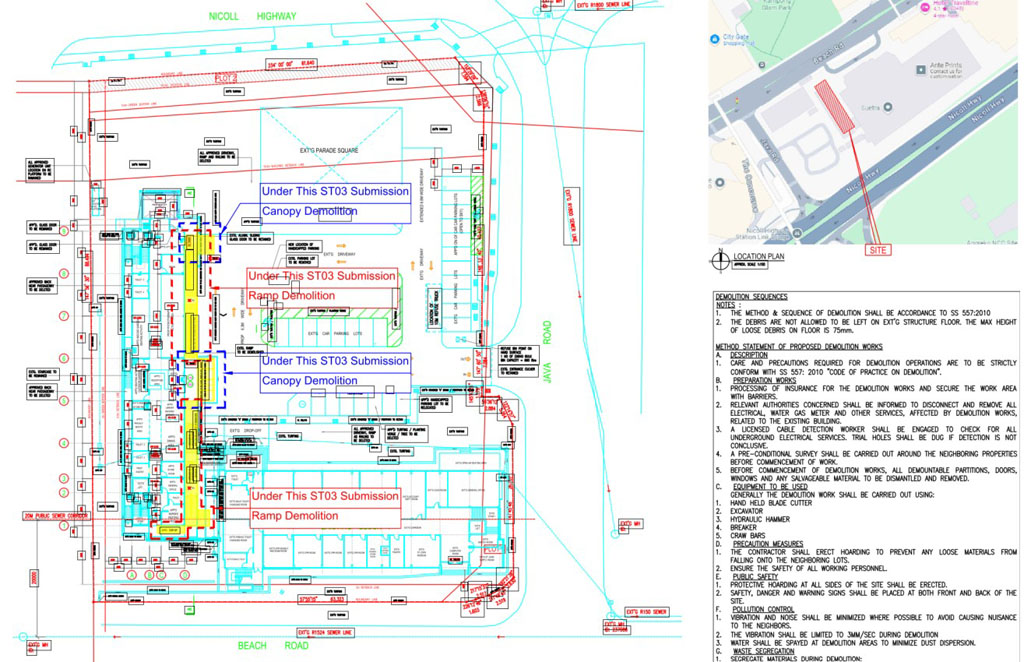
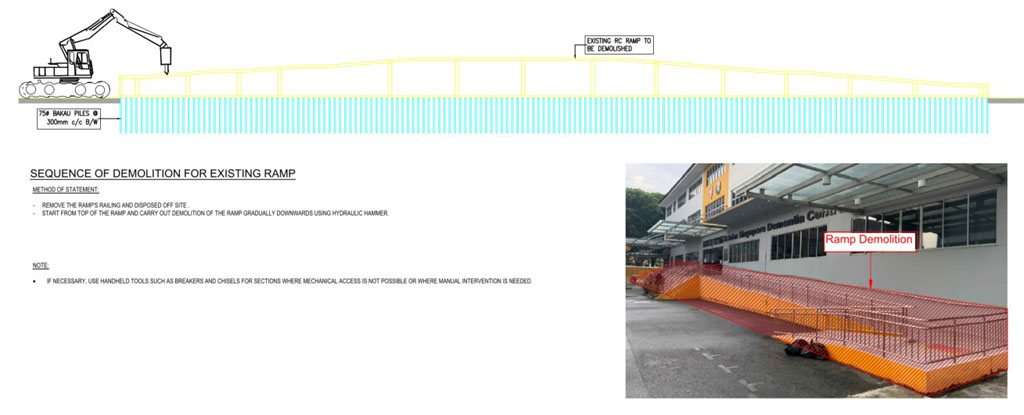
Demolition plans form the visual foundation of any submission, conveying complex technical information in an accessible format. These drawings must clearly illustrate existing conditions, proposed demolition extents, and sequencing strategies. The level of detail required varies with project complexity but always includes floor plans, elevations, sections, and critical details. Modern submissions increasingly utilize 3D modeling and visualization to enhance understanding of complex demolition sequences.
Site plans establish the project context, showing relationships between structures to be demolished and surrounding features. These plans must accurately depict property boundaries, adjacent buildings, utilities, trees, and other relevant features. Demolition limits must be clearly marked, along with any exclusion zones or protected areas. Site logistics planning overlays show equipment positioning, material handling routes, and temporary facilities. The integration of multiple information layers requires careful graphic design to maintain clarity while providing comprehensive information.
Structural analysis within the assessment report demonstrates that proposed demolition sequences maintain stability at all stages. This analysis considers load redistribution as elements are removed, identifies critical support requirements, and validates temporary bracing designs. For complex structures, computer modeling may be necessary to analyze intermediate conditions and verify stability margins. The report must also address potential failure modes and demonstrate that adequate safety factors are maintained throughout demolition.