
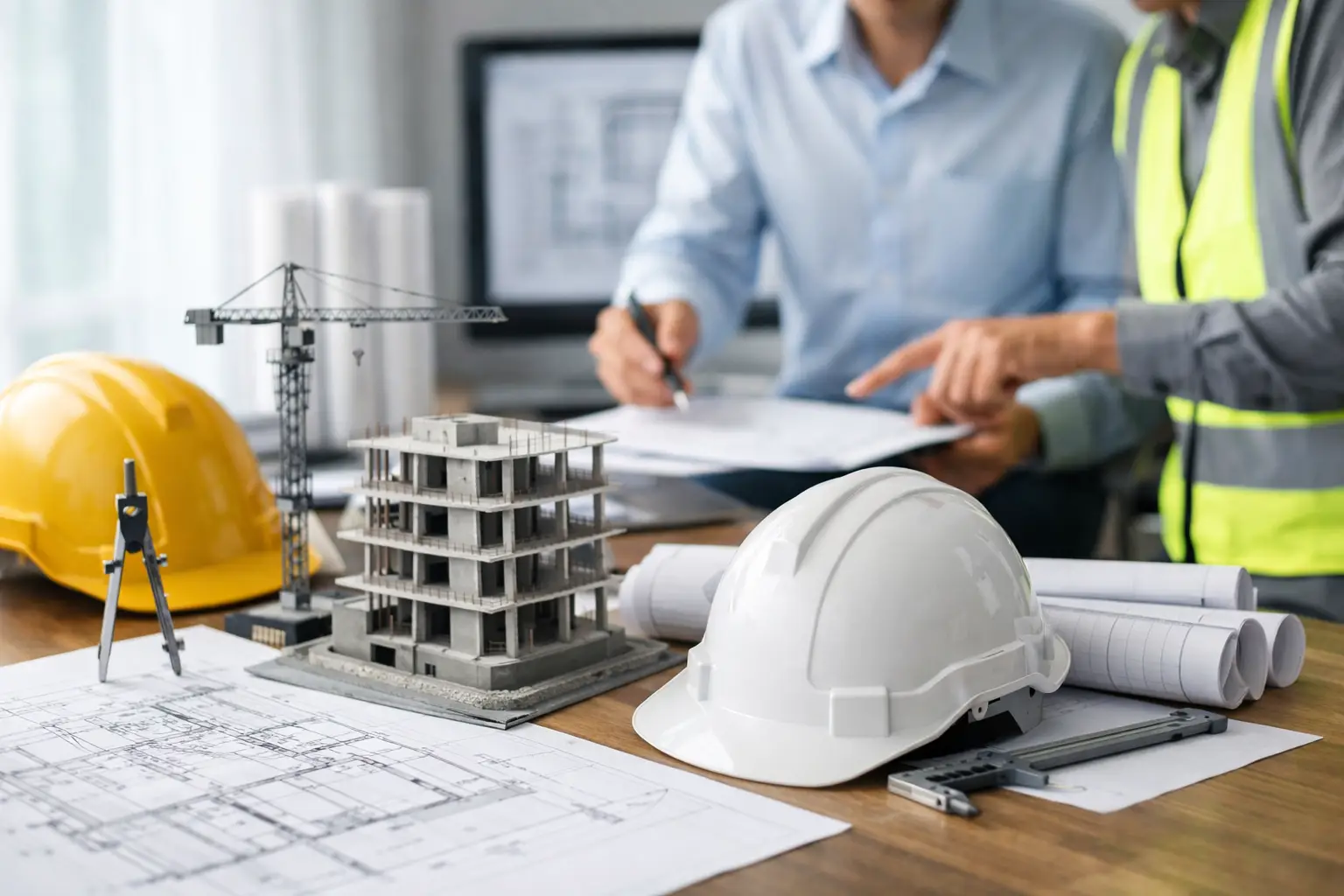
A project rarely fails because someone forgot the headline concept. It usually fails at the connection points – drainage that conflicts with the site layout, structural members that clash with architecture, load assumptions that do not match actual use, or submissions that stall because design intent was never translated into approval-ready documents. That is where civil and structural design services matter. They do not just produce calculations and drawings. They turn a buildable idea into a safe, compliant, and coordinated project.
For owners, developers, contractors, and facility stakeholders, the value is straightforward. Good engineering design reduces construction risk, shortens approval cycles, supports cost control, and limits expensive rework. In regulated environments, it also determines whether your project can move forward at all.
What Civil Engineering Design Services and Structural Design Services Actually Cover
Civil and structural design are often grouped together because they shape the same project from different technical angles. Civil design typically addresses site-related engineering works such as grading, drainage, utility coordination, external works, road interfaces, and sometimes earth retention or surface water management depending on the scope. Structural design focuses on how the building or asset stands up safely under real loads, including dead loads, live loads, wind, equipment loads, occupancy use, and other project-specific demands.
In practice, clients usually need both. A warehouse expansion may require new foundations, slab design, external drainage review, and authority submissions. An addition and alteration project may involve beam strengthening, openings in existing slabs, loading verification, and coordination with architectural and MEP changes. Even a relatively modest retrofit can trigger structural checks, compliance reviews, and documentation requirements that go far beyond a simple drawing update.
The right consultancy does more than size members and issue plans. It reviews existing conditions, identifies code and approval implications, coordinates with architects and specialist consultants, and prepares documentation that can stand up to authority review and site execution.
Why civil and structural design services affect approvals and delivery
Engineering design does not sit in isolation from approvals. If your project requires submissions to agencies or regulators, the design package must align with statutory expectations from the start. That includes the technical basis of design, the completeness of drawings, the suitability of calculations, and the credibility of the endorsing professionals.
This is one reason design fees should never be evaluated only on drawing output. Two consultants may both offer a structural design package, but one may simply provide calculations and framing plans, while the other may also manage authority-facing documentation, address comments, coordinate revisions across disciplines, and support the contractor through implementation. The difference shows up later as either smooth progress or repeated delays.
For projects involving renovations, industrial modifications, facade works, or compliance-driven upgrades, the approval path can be just as critical as the design itself. A design that is technically sound but poorly coordinated for submission can still become a project bottleneck.
When a standard design approach is not enough
Not every project starts from a blank sheet. Many of the most time-sensitive assignments involve existing structures, partial records, operational constraints, or active occupancy. That changes the design process.
If the building is older, available drawings may not reflect actual site conditions. If plant equipment is being added, load paths may need verification against current structural capacity rather than assumed capacity. If a tenant fit-out includes heavy services, mezzanines, or slab openings, the impact can extend well beyond the immediate work area. In these cases, engineering design often begins with investigation – site checks, record reviews, structural assessment, and sometimes forensic-level evaluation of defects or distress.
There is always a trade-off here. A fast design based on assumptions may save time upfront but create risk during submission or construction. A more rigorous approach takes longer at the beginning, yet it can better protect project outcomes by reducing redesign, change orders, and disputes later. This kind of front-end investigation can also assist with identifying hidden risks in existing structures. The right level of investigation depends on the age of the asset, the reliability of available information, and the consequences of getting it wrong.
Key deliverables in structural engineering design services
A serious engineering scope usually includes more than drawings. Depending on the project, deliverables may include design criteria, structural analysis, detailed calculations, civil layout plans, drainage design, foundation design, framing plans, reinforcement details, connection details, specifications, review of shop drawings with the Professional Engineer as part of construction documentation and compliance support, and coordinated submission documents.
For existing buildings, the scope may also include structural assessment reports, load verification, defect documentation, structural inspections for compliance and safety verification, rectification recommendations, and design for strengthening or remedial works. For regulated projects, endorsements, certifications, and authority submission packages may form part of the assignment. These inspections help verify structural integrity under real loads and support compliance with safety regulations. Façade inspections assess exterior safety and integrity, and regular checks help identify issues early, reduce repair risk, and support building-code compliance.
This matters because clients are not buying a generic engineering output. They are buying a broader range of support that helps move a real project from concept through approval and construction with fewer surprises.
How design coordination reduces rework
Most project friction happens between disciplines. Architectural intent may call for open spans, recessed slabs, facade modifications, or rooftop equipment, while MEP systems may require penetrations, plant supports, or service routes that affect structural members. Civil requirements may change levels, drainage falls, or access geometry. If these issues are discovered late, they become site problems.
Good civil and structural design services anticipate these interfaces early, with BIM improving accuracy in design and construction processes. BIM software also supports high-quality innovative design solutions and better collaboration across project teams and disciplines. That means reviewing architectural layouts for structural efficiency, checking service zones before finalizing beams or slab depths, confirming site levels against drainage requirements, and identifying whether approval conditions will affect the design. BIM models can also support effective project lifecycle management and, where needed, remote inspections through digital tools. This is especially important for addition and alteration work, where existing conditions and new interventions must be reconciled carefully.
Coordination is not glamorous, but it is where much of the project value sits. A coordinated design package helps contractors and relevant project stakeholders price and plan more accurately, build with fewer RFIs, and avoid field fixes, ensuring quality and schedule are not compromised.
Choosing the right consultant for civil and structural design services
Technical competence is the baseline. The more important question is whether the consultant can carry the project through its real constraints. That includes code compliance, authority interface, existing asset conditions, construction practicality, value engineering for compliance-driven projects, responsiveness during revisions, and construction engineering support for complex construction projects that improves safety, efficiency, and innovation.
Start by looking at the consultant’s experience with your project type. A consultant who regularly handles commercial additions, industrial upgrades, facade rectification, approval-driven works, and related work on infrastructure projects and construction projects across different sectors will usually identify risks earlier than one focused only on new-build design, with geotechnical capability supporting soil and foundation analysis when needed. Professional credentials and licensing matter as well, particularly where endorsements, certifications, or regulated submissions are required. Impact assessments may also be needed to evaluate environmental effects, identify risks to local flora and fauna, and define mitigation strategies. Environmental and sustainable design should also integrate eco-friendly practices and regulatory requirements.
You should also ask how the team handles scope boundaries. Are the consultant’s capabilities and expertise limited to issuing design drawings, or will the team coordinate with architects, fire safety consultants, MEP engineers, and contractors? Will they review site findings and revise the design when actual conditions differ from assumptions? Will they support technical clarifications during submission and construction? These are not secondary questions. They define whether the design consultant acts as a document producer or a project problem-solver.
For clients operating in tightly regulated environments, statutory familiarity is a practical advantage. Aman Engineering Consultancy, for example, positions its service around both engineering execution and authority-facing coordination, with a broad range of services shaped to clients’ specific needs through close collaboration and a clear commitment, which is often what owners and contractors actually need when timelines are tight and compliance risk is high.
What clients should prepare before engaging a design consultant
A better brief produces a better design outcome when early collaboration helps shape it around the client’s needs. At minimum, provide the intended use of the space or asset, available as-built drawings, site constraints, target timeline, known authority requirements, relevant authorities, any planned architectural or MEP changes, and any site-development inputs such as proposed building footprints and land grading information. If there are existing defects, prior reports, or past submission comments, those should be shared early.
Grading and drainage design is also important because proper water runoff planning helps prevent flooding.
It also helps to be clear about decision priorities. Some clients need the lowest structural intervention to preserve operations. Others prioritize faster approvals, planning for future growth, lowest construction cost, or support for temporary works where relevant. These goals do not always align. A lighter intervention may require more verification. A faster path may depend on narrowing the scope. A lower upfront cost may increase long-term maintenance or limit flexibility.
When the consultant understands these priorities from the start, the design can be shaped by focusing on actual business needs rather than idealized assumptions.
The real measure of good engineering design
The best design is not the one with the most drawings or the most conservative numbers. It is the one that fits the site, satisfies code, supports approvals, can be built without unnecessary complication, and performs as intended once the project is complete.
That requires judgment across civil engineering design services, structural engineering, and structural engineering design services, not just software output. It requires consultants who understand how design decisions affect submissions, procurement, construction sequencing, and downstream risk, because civil structural engineering plays a crucial role in project outcomes. And it requires a service model where the team excels through a wealth of practical experience and innovation while maintaining integrity, treating compliance, coordination, and execution support as part of the engineering job, not as extras.
If you are planning new construction, a retrofit, an addition, or a compliance-driven upgrade across different class types of assets, treat civil and structural design as an early project control tool, not a late-stage box to check. The earlier the technical issues are surfaced, the more options you still have, and we take pride in delivering that quality of support; see the company website for more detail on service scope.